God of grace and God of glory, on thy people pour thy power;
Crown thy ancient Church's story; Bring her bud to glorious flower.
Grant us wisdom, grant us courage for the facing of this hour,
For the facing of this hour.
Lo! the hosts of evil round us scorn thy Christ, assail his ways!
Fears and doubts too long have bound us; Free our hearts to work and praise.
Grant us wisdom, grant us courage for the living of these days,
For the living of these days.
Cure thy children's warring madness, bend our pride to thy control.
Shame our wanton, selfish gladness, rich in things and poor in soul.
Grant us wisdom, grant us courage lest we miss thy kingdom's goal,
Lest we miss thy kingdom's goal.
Set our feet on lofty places; gird our lives that they may be
Armored with all Christ-like graces in the fight to set men free.
Grant us wisdom, grant us courage that we fail not man nor thee,
That we fail not man nor thee.
Save us from weak resignation to the evils we deplore.
Let the search for thy salvation be our glory evermore.
Grant us wisdom, grant us courage serving thee whom we adore,
Serving thee whom we adore.
Amen.
Words by Harry Emerson Fosdick, 1878-1969
Published in The Methodist Hymnal, 1964 edition.
To read or hear the sermon that inspired this post, click here.
Showing posts with label Jesus. Show all posts
Showing posts with label Jesus. Show all posts
Monday, July 27, 2015

Saturday, September 13, 2014
May we not be of one heart?
As we continue our never-ending journey of spiritual discovery, My Lovely Wife and I joined a new Sunday school class last week that, for now at least, is studying the foundations of the United Methodist Church. We are reading a book called Revival: Faith as Wesley Lived It by pastor and theologian Adam Hamilton. (Nashville: Abingdon Press, 2014)
In the first chapter, we learn about John Wesley, the founder of Methodism, his family background in the context of 18th-century British religious and political history, and the beginnings of his path and ministry.
One particular passage struck a chord with me. Rather than tell you about it, I will quote it here at length:
What do you think?
In the first chapter, we learn about John Wesley, the founder of Methodism, his family background in the context of 18th-century British religious and political history, and the beginnings of his path and ministry.
One particular passage struck a chord with me. Rather than tell you about it, I will quote it here at length:
In his introduction to Explanatory Notes upon the New Testament, Wesley wrote these words that capture his spirit so well:"Would to God that all the party names and unscriptural phrases and forms which have divided the Christian world were forgot; and that we might all agree to sit down together as humble, loving disciples, at the feet of our common Master, to hear his word, to imbibe his Spirit, and to transcribe his life in our own!"
In one of his most famous sermons, "Catholic Spirit," Wesley wrote, "Though we can't think alike, may we not love alike? May we not be of one heart, though we are not of one opinion? Without all doubt, we may." Wesley was calling his hearers to listen to those with whom they disagreed and to focus on what they shared in common. He was teaching them (and us!) to build bridges rather than walls. The word catholic is a bit confusing to some, but in this context it simply means "universal." It conveys the sense that the church, the body of Christ, is made up not only of people who are in my denomination or tribe but of all who call upon the name of Christ, even if they disagree on this or that point of doctrine.The twenty-first century is as polarized as eighteenth-century England. We're not Tories and Whigs, conformists and dissenters, Anglicans and Puritans; we're Republicans and Democrats, fundamentalists and progressives, liberals and conservatives. Yet divisiveness and conflict drain us of our spiritual vitality and leave many today longing for a different approach, an approach like Wesley's catholic spirit.How do we embrace such an approach today? Paul described it when he admonished the believers in Philippi, who themselves were divided, "Do nothing from selfish ambition or conceit, but in humility regard others as better than yourselves. Let each of you look not to your own interests, but to the interests of others. Let the same mind be in you that was in Christ Jesus" (Philippians 2:3-5). To the Christians at Corinth, who also were deeply divided, Paul noted that love was the defining characteristic of Christian life, and then he went on to describe the character of Christian love: "Love is patient; love is kind; love is not envious or boastful or arrogant or rude. It does not insist on its own way; it is not irritable or resentful; it does not rejoice in wrongdoing, but rejoices in the truth. It bears all things, believes all things, hopes all things, endures all things" (1 Corinthians 13:4-7).Having a spirit like Wesley's today means that we assume the best of others, not the worst. We give them the benefit of the doubt. We speak well of others, not poorly. We treat them as we hope to be treated. We listen more and talk less. We walk in other people's shoes and try to understand what they believe and why. This does not mean we give up our convictions, but it does mean we test them. I've found that, after listening to another person's point of view, some ideas I was sure of were not nearly so convincing. I've found that, on more than one occasion, views that seemed utterly indefensible actually were quite convincing when I moved beyond my assumptions and took the time to listen.I've also learned that it's easy to be adamantly opposed to a viewpoint or position -- be it theological, ethical, or political -- when no one I deeply care about holds such views. But as I get to know those with views different from my own and come to care about them and consider them my friends, it is hard to be adamantly opposed to their views.Among the defining characteristics of the Christian life are humility, grace, and love. The test of our faith comes in how we respond to others and how willing we are to listen to, learn from, and love them.
What do you think?
Thursday, September 19, 2013
Go team!

It seems almost quaint today, but in its time, the TV sitcom Seinfeld broke new ground in the way it addressed how straight people misunderstand gays and lesbians. In a 1995 episode titled "The Beard," Elaine decides she wants to start dating an attractive man she knows. Only problem: He's gay. Undaunted, Elaine has a plan. She talks it over with Jerry at the coffee shop:*
Jerry: Not conversion. You're thinking conversion?
Elaine: Well, it did occur to me.
Jerry: You think you can get him to just change teams? He's not going to suddenly switch sides. Forget about it.
Elaine: Why? Is it irrevocable?
Jerry: Because when you join that team it's not a whim. He likes his team. He's set with that team.
Elaine: We've got a good team.
Jerry: Yeah, we do. We do have a good team.
Elaine: Why can't he play for us?
Jerry: They're only comfortable with *their* equipment.
Elaine: We just got along *so* great.
Jerry: Of course you did. Everyone gets along great when there's no possibility of sex.
Elaine: No, no, no, I sensed something. I did sense something. I perceived a possibility, Jerry.
Jerry: You realize you're venturing into uncharted waters.
Elaine: I realize that.
Jerry: Are you that desperate?
Elaine: Yes I am.
Monday, August 17, 2009
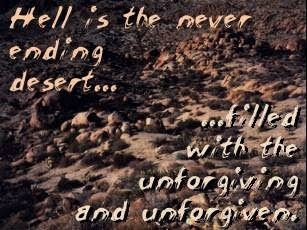
A culture of unforgiveness
Why can't we forgive in this country? And why, if we brag that this is such a great country, don't we believe in one of the things that set it apart: our justice system?
 We live in an age of hatred, rage and unforgiveness, and I believe this attitude holds us back as a society and as a nation.
We're all human. We all make mistakes. We all screw up. We all hurt someone sometime. And a few of us commit crimes.
We have a system in this country wherein a person who commits a crime is tried in public by a presumably impartial jury; if the person is convicted, he or she receives punishment proportionate to the crime, according to law. When the sentence is completed, the convicted person can go on with his or her life.
But that doesn't seem to be good enough for an awful lot of people. At a gut level, they want more. They want blood. And they never, ever want someone who has committed a crime to stop suffering consequences for it.
Look at Michael Vick. I'm not a big fan of pro football, and I don't think athletes or celebrities deserve any special treatment. I also am an animal lover. I cry at those Sarah McLaughlin Humane Society commercials.
What Vick did was horrible and disgusting. Dogfighting is vile, ugly and inhumane. I believe it offends God.
But we have laws to deal with dogfighting, and Vick was tried and punished according to those laws. He admitted his guilt, he did his time, and he paid his debt to society -- a debt that society (that's you and me) determined.
So why doesn't that settle it? Why can't people accept a "Paid in Full" stamp on Vick's rap sheet? Why do they want him banned from the NFL, banned from society, banned from making a living for the rest of his life?
Why are the provisions of the law not good enough for people who are mad at someone for breaking the law? It's as if we agree to sell someone a car for $5,000, they pay the $5,000, and after they've driven off we tell everyone they stole the car from us. "No, what I meant was I wanted them to pay me $5,000 every day for the rest of their life."
Many, if not most, companies won't hire anyone with a felony record, even if that person has fulfilled all the court's requirements for punishment and compensation. A former boss of mine once cackled over a job application on which the applicant checked "Yes" in response to the question "Have you ever been convicted of a felony?" "This guy is too stupid to get a job," the boss told me. I guess he would have preferred for the applicant to lie.
Even when the offense doesn't rise to the level of lawbreaking, no response by the offender ever seems adequate for the offended.
 Someone says something offensive or does something unethical and is called on it. The offender realizes his or her error and offers a sincere, specific, public apology. The person might also be fired or resign. "Not good enough!" the offended party cries.
What exactly do you want? You want the person who offended you to be totally abased, to be publicly humiliated, to lose everything he owns, to never have an opportunity to gain it back, and, ultimately, to die by stoning, followed by the body being burned in the public square. There. Satisfied?
Is that the American way? It certainly isn't Christ's way.
We all have sinned and fall short of the glory of God. Those of us who have accepted Jesus as our savior have received eternal forgiveness for all our sins -- past present and future, no matter how heinous. By Christ's death on the cross, our debt is paid in full. How then can we who have been forgiven of so much be so unforgiving? How can we who enjoy such abundant grace offer no grace to our neighbors who are just like us?
Punishment has to fit the crime. Penalties have to have limits. At some point the creditor has to stamp the promissory note "Paid in Full." Refusal to do so places the unforgiving creditor in a position of superiority to God, a sin far greater than the original offense. How dare the forgiven not forgive?
 We live in an age of hatred, rage and unforgiveness, and I believe this attitude holds us back as a society and as a nation.
We're all human. We all make mistakes. We all screw up. We all hurt someone sometime. And a few of us commit crimes.
We have a system in this country wherein a person who commits a crime is tried in public by a presumably impartial jury; if the person is convicted, he or she receives punishment proportionate to the crime, according to law. When the sentence is completed, the convicted person can go on with his or her life.
But that doesn't seem to be good enough for an awful lot of people. At a gut level, they want more. They want blood. And they never, ever want someone who has committed a crime to stop suffering consequences for it.
Look at Michael Vick. I'm not a big fan of pro football, and I don't think athletes or celebrities deserve any special treatment. I also am an animal lover. I cry at those Sarah McLaughlin Humane Society commercials.
What Vick did was horrible and disgusting. Dogfighting is vile, ugly and inhumane. I believe it offends God.
But we have laws to deal with dogfighting, and Vick was tried and punished according to those laws. He admitted his guilt, he did his time, and he paid his debt to society -- a debt that society (that's you and me) determined.
So why doesn't that settle it? Why can't people accept a "Paid in Full" stamp on Vick's rap sheet? Why do they want him banned from the NFL, banned from society, banned from making a living for the rest of his life?
Why are the provisions of the law not good enough for people who are mad at someone for breaking the law? It's as if we agree to sell someone a car for $5,000, they pay the $5,000, and after they've driven off we tell everyone they stole the car from us. "No, what I meant was I wanted them to pay me $5,000 every day for the rest of their life."
Many, if not most, companies won't hire anyone with a felony record, even if that person has fulfilled all the court's requirements for punishment and compensation. A former boss of mine once cackled over a job application on which the applicant checked "Yes" in response to the question "Have you ever been convicted of a felony?" "This guy is too stupid to get a job," the boss told me. I guess he would have preferred for the applicant to lie.
Even when the offense doesn't rise to the level of lawbreaking, no response by the offender ever seems adequate for the offended.
 Someone says something offensive or does something unethical and is called on it. The offender realizes his or her error and offers a sincere, specific, public apology. The person might also be fired or resign. "Not good enough!" the offended party cries.
What exactly do you want? You want the person who offended you to be totally abased, to be publicly humiliated, to lose everything he owns, to never have an opportunity to gain it back, and, ultimately, to die by stoning, followed by the body being burned in the public square. There. Satisfied?
Is that the American way? It certainly isn't Christ's way.
We all have sinned and fall short of the glory of God. Those of us who have accepted Jesus as our savior have received eternal forgiveness for all our sins -- past present and future, no matter how heinous. By Christ's death on the cross, our debt is paid in full. How then can we who have been forgiven of so much be so unforgiving? How can we who enjoy such abundant grace offer no grace to our neighbors who are just like us?
Punishment has to fit the crime. Penalties have to have limits. At some point the creditor has to stamp the promissory note "Paid in Full." Refusal to do so places the unforgiving creditor in a position of superiority to God, a sin far greater than the original offense. How dare the forgiven not forgive?
Sunday, August 16, 2009
Is there not a cause?
My brilliant pastor, Jentezen Franklin, this morning preached on the subject, "You need to get free of 'What's in it for me?'" He used the passage in 1 Samuel 17 where David's brothers and other men tell David what rewards would be given to the man who slays Goliath.
These guys were all focused on the prizes -- great riches, the king's daughter in marriage, and tax-free living for life. But all that talk didn't sit well with David, who said, "Is there not a cause?"
By that David meant there was a better reason than personal rewards to go after Goliath. This thug was insulting their God and everyone who believed in him. What more incentive did they need?
My pastor then lit into preachers who do things not for the glory of God and furtherance of his kingdom, but for self-aggrandizement and income opportunities. Then he turned it onto the rest of us, saying the cause of God's kingdom should be enough motivation to get us to serve others; we shouldn't need any other incentives, such as payment, recognition or fame. Amen and amen.
He kept repeating the line, "You need to get free of 'What's in it for me?'" And it got me thinking about the health-care town hall screamers and the current crop of conservatives in general. (By the way, Franklin himself is clearly pretty conservative, so this message surprised me a little, but he didn't take it where I'm about to.)
This very morning on the way to church I had been saying to My Lovely Wife that the theme of these protests makes me sick. I saw on TV a woman with a look of disgust say of President Obama's proposed plan, "It takes away from those who have been paying for health care for years [and] reduces our health care so that everyone else can have it."
Yes, and isn't that horrible? I mean, I got mine, so SCREW everybody else! Am I my brother's keeper? Why should I be expected to give up a tiny fraction of the abundance that I have so that my neighbor who has nothing might have something?
I've never really been able to put my finger on what it is about conservatives that nettles me so much, but this is it exactly: They go on and on about how great America is, America love it or leave it, God bless America, but they're not willing to give anything up to help their fellow Americans. Anyone who suggests Americans pool their resources to help out the least of these is decried as a SOCIALIST!
I wonder if any of them have ever read the last four verses of the second chapter of Acts. The first Christians were total pinkos.
I voted for Obama in the primary election, but I liked Hillary Clinton's health-care reform plan better. So I'm not suggesting everyone should just go for Obama's plan; it definitely needs work. What I am saying is that it appalls me that people think it's OK to let their fellow Americans -- even children -- go without health care.
Believe it or not, I actually liked George W. Bush for a minute when he was running for president in 2000. That line about ushering in an era of "compassionate conservatism" got my attention. But those words turned out to be not only a lie, but an oxymoron. In today's American politics, conservatism is by definition the opposite of compassionate. It is service only to oneself, regardless of the cost to others.
What's in it for me? How about a better night's sleep knowing some child won't die because her parents' insurance company didn't want to pay for a liver transplant? How about fewer people hitting you up for money while you're walking downtown because medical bills will no longer drive anyone into homelessness? How about the avoidance of a rebuke at the Judgment Seat of Christ when he says, "Inasmuch as you did it not to one of the least of these, you did it not to me."
These guys were all focused on the prizes -- great riches, the king's daughter in marriage, and tax-free living for life. But all that talk didn't sit well with David, who said, "Is there not a cause?"
By that David meant there was a better reason than personal rewards to go after Goliath. This thug was insulting their God and everyone who believed in him. What more incentive did they need?
My pastor then lit into preachers who do things not for the glory of God and furtherance of his kingdom, but for self-aggrandizement and income opportunities. Then he turned it onto the rest of us, saying the cause of God's kingdom should be enough motivation to get us to serve others; we shouldn't need any other incentives, such as payment, recognition or fame. Amen and amen.
He kept repeating the line, "You need to get free of 'What's in it for me?'" And it got me thinking about the health-care town hall screamers and the current crop of conservatives in general. (By the way, Franklin himself is clearly pretty conservative, so this message surprised me a little, but he didn't take it where I'm about to.)
This very morning on the way to church I had been saying to My Lovely Wife that the theme of these protests makes me sick. I saw on TV a woman with a look of disgust say of President Obama's proposed plan, "It takes away from those who have been paying for health care for years [and] reduces our health care so that everyone else can have it."
Yes, and isn't that horrible? I mean, I got mine, so SCREW everybody else! Am I my brother's keeper? Why should I be expected to give up a tiny fraction of the abundance that I have so that my neighbor who has nothing might have something?
I've never really been able to put my finger on what it is about conservatives that nettles me so much, but this is it exactly: They go on and on about how great America is, America love it or leave it, God bless America, but they're not willing to give anything up to help their fellow Americans. Anyone who suggests Americans pool their resources to help out the least of these is decried as a SOCIALIST!
I wonder if any of them have ever read the last four verses of the second chapter of Acts. The first Christians were total pinkos.
I voted for Obama in the primary election, but I liked Hillary Clinton's health-care reform plan better. So I'm not suggesting everyone should just go for Obama's plan; it definitely needs work. What I am saying is that it appalls me that people think it's OK to let their fellow Americans -- even children -- go without health care.
Believe it or not, I actually liked George W. Bush for a minute when he was running for president in 2000. That line about ushering in an era of "compassionate conservatism" got my attention. But those words turned out to be not only a lie, but an oxymoron. In today's American politics, conservatism is by definition the opposite of compassionate. It is service only to oneself, regardless of the cost to others.
What's in it for me? How about a better night's sleep knowing some child won't die because her parents' insurance company didn't want to pay for a liver transplant? How about fewer people hitting you up for money while you're walking downtown because medical bills will no longer drive anyone into homelessness? How about the avoidance of a rebuke at the Judgment Seat of Christ when he says, "Inasmuch as you did it not to one of the least of these, you did it not to me."
Monday, April 20, 2009
Revelation led

We have a lot of electronic billboards around here, the ones that look like giant TV screens and change the ad every few seconds.
One near the Georgia Dome in Atlanta is owned by a company called Revelation LED, which promotes itself on a couple of the panels in the rotation.
The first time I saw the promo's big, bold logo -- REVELATION|LED -- I thought it was an ad for some church. I chuckled when I realized my mistake, but I thought, "What a great slogan that would be for a church: REVELATION LED."
It reminds me of a quote by Israel Houghton on his "New Season" CD (my favorite Christian album):
"Seasons are not governed by clocks and calendars. Seasons are governed by revelation and truth."
It's a great line in a great monologue that gets my blood pumping every time. Hear it for yourself in context in the following file. The monologue follows the song, which is quite beautiful and was co-written by Free Chapel's worship leader, Ricardo Sanchez. The monologue begins at 6:18 of the clip.
Friday, April 17, 2009
Kingdom Coaches
I saw a tour bus today with the name Kingdom Coach emblazoned on the sides and back. I like that name -- not necessarily for a bus company, but as a title for a person, a spiritual guide.
Two of my kingdom coaches are hurting right now. C.David, an inexhaustible font of encouragement and optimism, is mending rapidly from extensive surgery to remove a tumor in his belly; now he's learned he's going to need two chemotherapy treatments a week for six months. Sister Dorothy, who seems to have committed the entire Bible to memory and always calls up the perfect verse to address any concern, is in severe pain from a vascular problem in her feet.
God, please bless both of these my coaches, as well as all the others. They've helped you make me into the player I am today.
Two of my kingdom coaches are hurting right now. C.David, an inexhaustible font of encouragement and optimism, is mending rapidly from extensive surgery to remove a tumor in his belly; now he's learned he's going to need two chemotherapy treatments a week for six months. Sister Dorothy, who seems to have committed the entire Bible to memory and always calls up the perfect verse to address any concern, is in severe pain from a vascular problem in her feet.
God, please bless both of these my coaches, as well as all the others. They've helped you make me into the player I am today.
Thursday, January 1, 2009
Women begetting badly
Matthew's genealogy of Jesus covers forty-and-two generations, but it mentions just five women -- and only four by name. The interesting and fun thing is that every one of those women was scandalous in some way.
Tamar had been married to Judah's son Er, but Er died. According to Hebrew custom, Er's brother Onan was supposed to take on Tamar as his wife to provide offspring for his late brother, but he failed to fulfill his duty. (Onan "wasted his seed on the ground," meaning he pulled out so Tamar wouldn't get pregnant; it is misunderstanding of this Scripture that has led many Christians to condemn masturbation, which in fact has nothing to do with this.)
As Tamar's father-in-law, it was Judah's duty to provide a man to help her conceive, but he reneged. So, Tamar tricked Judah into fulfilling this duty by disguising herself as a prostitute and getting him to sleep with her. When Tamar, no longer disguised, was found to be pregnant, Judah tried to have her burned at the stake. However, Tamar turned the tables by proving that Judah was the father, exposing him as a john and as a man who failed to fulfill his word or his duty.
Judah -- a son of Jacob and patriarch of the largest of the Twelve Tribes of Israel -- admitted in front of everyone, "She is more righteous than I." Tamar gave birth to twins, one of whom was Jesus' ancestor Perez.
Rahab was the mother of Boaz and great-grandmother of David, the greatest king Israel would have and a figure who in many ways was a precursor of Jesus. She was also a prostitute, but she helped the spies who scouted out the town of Jericho for Joshua.
Rahab's son Boaz married Ruth, who was not a Hebrew. She was a minority, a foreigner, a member of a different race, so to speak, but she became David's grandmother.
Next in line is a woman whom Matthew calls "Uriah's wife." Her name was Bathsheba, and David had a one-night stand with her while Uriah was off fighting a war for him. David married her after having Uriah killed. She eventually gave birth to Solomon, who succeeded David as king and was one of Jesus' forefathers.
The last scandalous woman on the list is a girl named Mary, who was an unwed teenage mother whose fiance knew he wasn't the father. Her fiance, Joseph, "desired to put her away secretly." However, an angel of the Lord let Joseph know that Mary had conceived by the power of the Holy Spirit, so he stuck with her.
And, as Jentezen Franklin said, Mary had a little Lamb.
Every one of these women was at the center of a scandal, every one a subject of gossip. And every one is in the bloodline of Jesus, the Son of God and Savior of the world.
God esteems -- and redeems -- scandalous women.
Tamar had been married to Judah's son Er, but Er died. According to Hebrew custom, Er's brother Onan was supposed to take on Tamar as his wife to provide offspring for his late brother, but he failed to fulfill his duty. (Onan "wasted his seed on the ground," meaning he pulled out so Tamar wouldn't get pregnant; it is misunderstanding of this Scripture that has led many Christians to condemn masturbation, which in fact has nothing to do with this.)
As Tamar's father-in-law, it was Judah's duty to provide a man to help her conceive, but he reneged. So, Tamar tricked Judah into fulfilling this duty by disguising herself as a prostitute and getting him to sleep with her. When Tamar, no longer disguised, was found to be pregnant, Judah tried to have her burned at the stake. However, Tamar turned the tables by proving that Judah was the father, exposing him as a john and as a man who failed to fulfill his word or his duty.
Judah -- a son of Jacob and patriarch of the largest of the Twelve Tribes of Israel -- admitted in front of everyone, "She is more righteous than I." Tamar gave birth to twins, one of whom was Jesus' ancestor Perez.
Rahab was the mother of Boaz and great-grandmother of David, the greatest king Israel would have and a figure who in many ways was a precursor of Jesus. She was also a prostitute, but she helped the spies who scouted out the town of Jericho for Joshua.
Rahab's son Boaz married Ruth, who was not a Hebrew. She was a minority, a foreigner, a member of a different race, so to speak, but she became David's grandmother.
Next in line is a woman whom Matthew calls "Uriah's wife." Her name was Bathsheba, and David had a one-night stand with her while Uriah was off fighting a war for him. David married her after having Uriah killed. She eventually gave birth to Solomon, who succeeded David as king and was one of Jesus' forefathers.
The last scandalous woman on the list is a girl named Mary, who was an unwed teenage mother whose fiance knew he wasn't the father. Her fiance, Joseph, "desired to put her away secretly." However, an angel of the Lord let Joseph know that Mary had conceived by the power of the Holy Spirit, so he stuck with her.
And, as Jentezen Franklin said, Mary had a little Lamb.
Every one of these women was at the center of a scandal, every one a subject of gossip. And every one is in the bloodline of Jesus, the Son of God and Savior of the world.
God esteems -- and redeems -- scandalous women.
Thursday, December 4, 2008
Claim and proclaim
You may remember a series of posts I wrote in February and March about healing. The focus then was mainly on physical healing, but the principles apply to all kinds of healing, including emotional and relational.
The second part of the series was based on the passage in the Gospel of Luke about the woman with "an issue of blood" and how she received healing by pushing through the crowd to get to the source of healing, Jesus. And he so overflows with healing that all it took for her was to touch the edge of the back of his garment.
I love the last part of the story, as told by Luke:
This passage is so loaded with messages, I'll have to go a phrase at a time. Pay attention now; this is for you.
This woman had tried to disappear into the crowd, but Jesus easily singled her out as the one among the many. She had been shunned by the crowd because of her problem, but now she was trying to blend in.
How many times have you found yourself alone in the midst of a crowd, surrounded by dozens or even thousands of people, not one of whom knows you or understands your pain? One place where it happens to a lot of people is in church. You show up on Sunday, dressed in your finest clothes and burdened with your darkest secrets, and just hope no one notices you or discovers your uncleanness. Most of the crowd won't take any note of you because they're too busy worrying that someone will notice them and discover their uncleanness. Or they're just there to find a mate or to see the spectacle or to kill a couple of hours on a slow weekend.
But Jesus notices us. We can't avoid him or evade him. He sees that monkey on your back, that baggage in your hand, that cloud over your head. And he knows why you're really there.
This woman had spent years in forced isolation, totally shunned by society – particularly by the rigid religious types. The society and the sanctimonious had no sympathy for her, only revulsion and rejection and condemnation. But now at last she had found someone who had compassion for her, and who had already healed her.
So she did the only two things she could do: She surrendered and she worshipped.
Those are a couple of tough things for us -- any of us, but especially us Americans (and particularly us of the male persuasion) -- to do. We're so self-sufficient and self-actualized and self-reliant and self-centered and self-worshiping that we find it very difficult or indeed impossible to acknowledge a force greater than our will, much less submit to it.
But let's face it: Surrender and worship are the only appropriate responses to an encounter with Jesus. Compared to him we are nothing, and to pretend otherwise is not only blasphemous, it's downright ridiculous. Your refusal to worship at the feet of Jesus is like a little poodle yapping at a Great Dane; to anyone with any perspective it's just silly.
So quit yapping and worship the God who stands before you.
Not in reverent silence, not in her private prayer closet, not anonymously over the phone. In the presence of ALL the people. Yes, those people. The people who had condemned her and rejected her and recoiled from her. The people who didn't have what she had. The people whose faith and commitment were not sufficient to draw Jesus' attention. In the presence of those people,
The sister testified. She told the story of how she got over. She said she wasn't gonna talk about it but she couldn't keep it to herself. It was like fire shut up in her bones.
When you find a good dentist or a good pediatrician or a good barber, don't you tell everyone you know about it? When you receive a healing from the Good Shepherd, should you do any less? Shouldn't you tell everybody about it, so they can get in on the action too? You're not ashamed to refer someone to your car salesman; why are you ashamed to refer them to your Healer and Redeemer?
She told why she had touched him. She acknowledged her uncleanness before all the people, and she was not ashamed. She was not ashamed, because there was a second clause in that sentence: "how she had been instantly healed." Jesus had taken away her reproach, and now there was no condemnation. She could speak freely of it because now, thanks to the healing power of Jesus, she was free of it.
Free at last! Free at last! Thank God Almighty! I'm free at last!
Daughter. ... My child. ... My flesh and blood. ... My baby. ... Possessor of my heritage and bearer of my future. Now you are all this. You used to be all that -- dirty, unwanted, untouchable, unclean -- but now you are all this. What a remarkable, miraculous, sudden reversal. But how?
Notice that Jesus doesn't take credit for what had just happened. It happened because of her action, driven by her faith. She reached out to him because she believed. He didn't do anything but show up. He didn't wave his hand or utter a prayer or lay his hands on her. Heck, he wasn't even facing her when she reached out and grabbed the healing that was there waiting for her.
It was available to her as long as she was willing to push through that hostile, disapproving, sanctimonious, celebrity-mad, profane, faith-challenged crowd, which represents the world and the church. She said, "I don't care what they all think about me or believe about him, I'm going to reach out and claim my healing."
Are you ready to claim your healing today? Are you determined enough to fight your way through the obstructing crowd and get close enough to Jesus to receive his readily available healing? Are you prepared to surrender your ego and your pride and your failed efforts to fix things yourself? Are you ready to worship at the feet of the Great Physician and admit and declare that he is King of Kings and Lord of Lords? If you will do these simple things, then and only then will you be able to do as this woman did:
The second part of the series was based on the passage in the Gospel of Luke about the woman with "an issue of blood" and how she received healing by pushing through the crowd to get to the source of healing, Jesus. And he so overflows with healing that all it took for her was to touch the edge of the back of his garment.
I love the last part of the story, as told by Luke:
Then the woman, seeing that she could not go unnoticed, came trembling and fell at his feet. In the presence of all the people, she told why she had touched him and how she had been instantly healed. Then he said to her, “Daughter, your faith has healed you. Go in peace.”
This passage is so loaded with messages, I'll have to go a phrase at a time. Pay attention now; this is for you.
Then the woman, seeing that she could not go unnoticed,
This woman had tried to disappear into the crowd, but Jesus easily singled her out as the one among the many. She had been shunned by the crowd because of her problem, but now she was trying to blend in.
How many times have you found yourself alone in the midst of a crowd, surrounded by dozens or even thousands of people, not one of whom knows you or understands your pain? One place where it happens to a lot of people is in church. You show up on Sunday, dressed in your finest clothes and burdened with your darkest secrets, and just hope no one notices you or discovers your uncleanness. Most of the crowd won't take any note of you because they're too busy worrying that someone will notice them and discover their uncleanness. Or they're just there to find a mate or to see the spectacle or to kill a couple of hours on a slow weekend.
But Jesus notices us. We can't avoid him or evade him. He sees that monkey on your back, that baggage in your hand, that cloud over your head. And he knows why you're really there.
... came trembling and fell at his feet.
This woman had spent years in forced isolation, totally shunned by society – particularly by the rigid religious types. The society and the sanctimonious had no sympathy for her, only revulsion and rejection and condemnation. But now at last she had found someone who had compassion for her, and who had already healed her.
So she did the only two things she could do: She surrendered and she worshipped.
Those are a couple of tough things for us -- any of us, but especially us Americans (and particularly us of the male persuasion) -- to do. We're so self-sufficient and self-actualized and self-reliant and self-centered and self-worshiping that we find it very difficult or indeed impossible to acknowledge a force greater than our will, much less submit to it.
But let's face it: Surrender and worship are the only appropriate responses to an encounter with Jesus. Compared to him we are nothing, and to pretend otherwise is not only blasphemous, it's downright ridiculous. Your refusal to worship at the feet of Jesus is like a little poodle yapping at a Great Dane; to anyone with any perspective it's just silly.
So quit yapping and worship the God who stands before you.
In the presence of all the people,
Not in reverent silence, not in her private prayer closet, not anonymously over the phone. In the presence of ALL the people. Yes, those people. The people who had condemned her and rejected her and recoiled from her. The people who didn't have what she had. The people whose faith and commitment were not sufficient to draw Jesus' attention. In the presence of those people,
she told why she had touched him and how she had been instantly healed.
The sister testified. She told the story of how she got over. She said she wasn't gonna talk about it but she couldn't keep it to herself. It was like fire shut up in her bones.
When you find a good dentist or a good pediatrician or a good barber, don't you tell everyone you know about it? When you receive a healing from the Good Shepherd, should you do any less? Shouldn't you tell everybody about it, so they can get in on the action too? You're not ashamed to refer someone to your car salesman; why are you ashamed to refer them to your Healer and Redeemer?
She told why she had touched him. She acknowledged her uncleanness before all the people, and she was not ashamed. She was not ashamed, because there was a second clause in that sentence: "how she had been instantly healed." Jesus had taken away her reproach, and now there was no condemnation. She could speak freely of it because now, thanks to the healing power of Jesus, she was free of it.
Free at last! Free at last! Thank God Almighty! I'm free at last!
Then he said to her, "Daughter, ..."
Daughter. ... My child. ... My flesh and blood. ... My baby. ... Possessor of my heritage and bearer of my future. Now you are all this. You used to be all that -- dirty, unwanted, untouchable, unclean -- but now you are all this. What a remarkable, miraculous, sudden reversal. But how?
"Your faith has healed you."
Notice that Jesus doesn't take credit for what had just happened. It happened because of her action, driven by her faith. She reached out to him because she believed. He didn't do anything but show up. He didn't wave his hand or utter a prayer or lay his hands on her. Heck, he wasn't even facing her when she reached out and grabbed the healing that was there waiting for her.
It was available to her as long as she was willing to push through that hostile, disapproving, sanctimonious, celebrity-mad, profane, faith-challenged crowd, which represents the world and the church. She said, "I don't care what they all think about me or believe about him, I'm going to reach out and claim my healing."
Are you ready to claim your healing today? Are you determined enough to fight your way through the obstructing crowd and get close enough to Jesus to receive his readily available healing? Are you prepared to surrender your ego and your pride and your failed efforts to fix things yourself? Are you ready to worship at the feet of the Great Physician and admit and declare that he is King of Kings and Lord of Lords? If you will do these simple things, then and only then will you be able to do as this woman did:
Go in peace.
Friday, October 24, 2008
The Deacon is Freakin'
OK, this is pretty wild. We truly are made in the image and likeness of God. Watch this:
Wednesday, October 8, 2008
Sunday, July 27, 2008
Family circles
Looking back, I realize I failed to follow up on a line of thought in a previous post, and that loop needs to be closed.
I said that despite my pastor's gentle encouragement, I didn't cry when my mom died.
For the record, that situation was rectified on the Sunday after the funeral, when the freakin' dam burst.
That same pastor, Dennis Butts, had come over and sat down next to me. He asked me if I remembered what he had told me earlier, that it was OK to cry. I told him I did remember, but that's just not the way my grief was coming out. He just sat there with me for a couple of minutes, neither one of us saying anything.
Pastor Butts is a big bear of a man at better than 6 feet tall and better than 200 pounds. He carries a large, quiet, powerful presence, much as my dad did. That presence began to overshadow me that day on the front pew -- enveloping me, drawing me in, surrounding me, subsuming me. I felt like I was inside a small, dark closet, in the deepest shadows behind the long winter coats. I felt safe.
That's when I absolutely lost it, sobbing inconsolably on that front pew for 20 minutes after the service ended.
I could hear people chatting, some stopping to ask MLW what was wrong with me, random people placing a hand on my shoulder or offering a word of comfort, and the tears and snot pouring out. Someone finally had the good sense and compassion to stuff a couple of tissues into my hand.
That day it became clearer to me than ever that I had a new family. It didn't replace my birth family but augmented it. I felt safe enough to cry like a baby in front of these people, and they responded with love, comfort, empathy and compassion.
Less than three weeks later, when my father also died, my tears were warmed up and ready to go, and go they did. My hysterical reaction at the hospital remains one of the more memorable entries in my family's grief scrapbook.
But it's all good. MLW and my sister Sheila stayed with me to comfort me while I was treated (read: sedated) in the emergency room, and no one made fun of me when we eventually made it back to the house, where we sat around the dining room table in stunned disbelief.
Both my families had their finest hours in the days and weeks that followed. My birth family, without exception, demonstrated kindness and grace to a degree that I had never seen in many of them before, and it helped heal some old wounds in me. My church family, which I already knew to be full of kindness and grace, proved generous and gentle as well, weeping and grieving with us, taking on themselves the loss of two people they had never known.
I would be remiss if I didn't acknowledge as well the kindness of my co-workers, who sent stacks of cards and food and sent flowers to the funeral home and covered my extended absence from work without a word of complaint.
It's true that there's a lot of bad stuff and a lot of bad people in this world. But these moments and these memories remind me that God looks after his own:
I apologize for writing so much about death and grief lately. It's a season the Spirit has sent me into, and I'm walking through it. Which reminds me of something another member of my church family, a man named Brother Herman, said a couple of years ago:
"Psalm 23 says, 'Yea, though I walk through the valley of the shadow of death ...'
Notice that it says 'walk through'; it doesn't say 'set up camp in.'"
Thanks for that, Brother Herman. Thanks to all my brothers and sisters. And thanks, God, for them.
I said that despite my pastor's gentle encouragement, I didn't cry when my mom died.
For the record, that situation was rectified on the Sunday after the funeral, when the freakin' dam burst.
That same pastor, Dennis Butts, had come over and sat down next to me. He asked me if I remembered what he had told me earlier, that it was OK to cry. I told him I did remember, but that's just not the way my grief was coming out. He just sat there with me for a couple of minutes, neither one of us saying anything.
"It's OK to cry."
Pastor Butts is a big bear of a man at better than 6 feet tall and better than 200 pounds. He carries a large, quiet, powerful presence, much as my dad did. That presence began to overshadow me that day on the front pew -- enveloping me, drawing me in, surrounding me, subsuming me. I felt like I was inside a small, dark closet, in the deepest shadows behind the long winter coats. I felt safe.
That's when I absolutely lost it, sobbing inconsolably on that front pew for 20 minutes after the service ended.
I could hear people chatting, some stopping to ask MLW what was wrong with me, random people placing a hand on my shoulder or offering a word of comfort, and the tears and snot pouring out. Someone finally had the good sense and compassion to stuff a couple of tissues into my hand.
That day it became clearer to me than ever that I had a new family. It didn't replace my birth family but augmented it. I felt safe enough to cry like a baby in front of these people, and they responded with love, comfort, empathy and compassion.
Less than three weeks later, when my father also died, my tears were warmed up and ready to go, and go they did. My hysterical reaction at the hospital remains one of the more memorable entries in my family's grief scrapbook.
But it's all good. MLW and my sister Sheila stayed with me to comfort me while I was treated (read: sedated) in the emergency room, and no one made fun of me when we eventually made it back to the house, where we sat around the dining room table in stunned disbelief.
Both my families had their finest hours in the days and weeks that followed. My birth family, without exception, demonstrated kindness and grace to a degree that I had never seen in many of them before, and it helped heal some old wounds in me. My church family, which I already knew to be full of kindness and grace, proved generous and gentle as well, weeping and grieving with us, taking on themselves the loss of two people they had never known.
I would be remiss if I didn't acknowledge as well the kindness of my co-workers, who sent stacks of cards and food and sent flowers to the funeral home and covered my extended absence from work without a word of complaint.
It's true that there's a lot of bad stuff and a lot of bad people in this world. But these moments and these memories remind me that God looks after his own:
A father to the fatherless, a defender of widows, is God in his holy
dwelling.
God sets the lonely in families, he leads forth the prisoners with
singing;
... You gave abundant showers, O God;
You refreshed your weary inheritance. -- Psalm 68:5-6a;9
I apologize for writing so much about death and grief lately. It's a season the Spirit has sent me into, and I'm walking through it. Which reminds me of something another member of my church family, a man named Brother Herman, said a couple of years ago:
"Psalm 23 says, 'Yea, though I walk through the valley of the shadow of death ...'
Notice that it says 'walk through'; it doesn't say 'set up camp in.'"
Thanks for that, Brother Herman. Thanks to all my brothers and sisters. And thanks, God, for them.
Wednesday, March 5, 2008
An issue of blood
The best example of someone going to Jesus and literally grabbing hold of his healing power is the woman with the “issue of blood.” Her story is told in the fifth chapter of Mark and the eighth chapter of Luke.
This poor woman had a condition that was not only physically painful but also socially stigmatizing, and it had been going on for years. She had nonstop menstrual bleeding, which under Old Testament law kept her perpetually “ceremonially unclean” (Leviticus 15:25-27).
Think for a moment about the isolation and loneliness this would mean. No one could touch her without becoming unclean, and anything she touched became unclean. Think what it would be like for you if you could never give or receive a hug, or even a handshake or a pat on the back. Or use a shopping cart. Or pick up produce at the market and put it back down. Or walk on a crowded sidewalk. Or get your hair cut. Or go to a concert or a game. Or a restaurant. Or school. Or work. Or church. And forget about meeting someone special, falling in love and starting a family.
Imagine the shame and degradation that would come with that kind of shunning, along with the fear of embarrassingly bleeding through her clothes. Not to mention the terrible cramps that must have been a source of constant misery.
The medical treatments of the day were probably quite crude and excruciatingly painful; the NIV says she "had suffered a great deal under the care of many doctors and had spent all she had, yet instead of getting better she grew worse."
And the Word says this went on for twelve years. A lot of people would kill themselves under that kind of stress, and who could blame them?
But this woman chose life, and she knew where to find it.
Can you imagine the courage it took for her to leave her house and venture to that crowded marketplace where Jesus was visiting? To press through the throng, this mob of strangers who would revile her and recoil from her if they knew her terrible secret?
But nothing else had worked, and she was desperate. This might be her only chance. She waded into the crowd and pressed through. She didn’t seek to speak to the man or ask anything of him, but just hoped to grasp the hem of his garment.
And she did it. The Bible says she was behind Jesus and touched the edge of this cloak, and immediately she felt healing flow from him into her body.
She thought that would be the end of it, that she could disappear back into the crowd and slip away, but with Jesus you always get more than you bargain for.
“Who touched my clothes?” he said (as if he didn’t know). His disciples practically laughed at him: “You have all these thousands of people pressing in on you, and you ask, ‘Who touched me?’”
Yes, thousands were pressing in on him, but only one had truly touched him.
Have you reached out to Jesus with a passion and a fervor that will make you stand out from the crowd?
I’ll have more about this in a future post.
This poor woman had a condition that was not only physically painful but also socially stigmatizing, and it had been going on for years. She had nonstop menstrual bleeding, which under Old Testament law kept her perpetually “ceremonially unclean” (Leviticus 15:25-27).
Think for a moment about the isolation and loneliness this would mean. No one could touch her without becoming unclean, and anything she touched became unclean. Think what it would be like for you if you could never give or receive a hug, or even a handshake or a pat on the back. Or use a shopping cart. Or pick up produce at the market and put it back down. Or walk on a crowded sidewalk. Or get your hair cut. Or go to a concert or a game. Or a restaurant. Or school. Or work. Or church. And forget about meeting someone special, falling in love and starting a family.
You are condemned to life in solitary confinement with invisible walls.
Imagine the shame and degradation that would come with that kind of shunning, along with the fear of embarrassingly bleeding through her clothes. Not to mention the terrible cramps that must have been a source of constant misery.
The medical treatments of the day were probably quite crude and excruciatingly painful; the NIV says she "had suffered a great deal under the care of many doctors and had spent all she had, yet instead of getting better she grew worse."
And the Word says this went on for twelve years. A lot of people would kill themselves under that kind of stress, and who could blame them?
But this woman chose life, and she knew where to find it.
Can you imagine the courage it took for her to leave her house and venture to that crowded marketplace where Jesus was visiting? To press through the throng, this mob of strangers who would revile her and recoil from her if they knew her terrible secret?
But nothing else had worked, and she was desperate. This might be her only chance. She waded into the crowd and pressed through. She didn’t seek to speak to the man or ask anything of him, but just hoped to grasp the hem of his garment.
And she did it. The Bible says she was behind Jesus and touched the edge of this cloak, and immediately she felt healing flow from him into her body.
She thought that would be the end of it, that she could disappear back into the crowd and slip away, but with Jesus you always get more than you bargain for.
He took notice of her.
“Who touched my clothes?” he said (as if he didn’t know). His disciples practically laughed at him: “You have all these thousands of people pressing in on you, and you ask, ‘Who touched me?’”
Yes, thousands were pressing in on him, but only one had truly touched him.
Have you reached out to Jesus with a passion and a fervor that will make you stand out from the crowd?
I’ll have more about this in a future post.
Saturday, February 23, 2008
Take your healing
The Lord revealed something interesting to me this morning while I was doing my daily Bible reading.
When they [Jesus and his disciples] had crossed over [the Sea of Galilee], they landed at Gennesaret and anchored there. As soon as they got out of the boat, people recognized Jesus. They ran throughout that whole region and carried the sick on mats to wherever they heard he was. And wherever he went – into villages, towns or countryside – they placed the sick in the marketplaces. They begged him to let them touch even the edge of his cloak, and all who touched him were healed. -- Mark 6:53-56
What jumped out at me was the last phrase: “... and all who touched him were healed.”
When they [Jesus and his disciples] had crossed over [the Sea of Galilee], they landed at Gennesaret and anchored there. As soon as they got out of the boat, people recognized Jesus. They ran throughout that whole region and carried the sick on mats to wherever they heard he was. And wherever he went – into villages, towns or countryside – they placed the sick in the marketplaces. They begged him to let them touch even the edge of his cloak, and all who touched him were healed. -- Mark 6:53-56
What jumped out at me was the last phrase: “... and all who touched him were healed.”
He didn’t touch them, they touched him.
He didn’t touch them, they touched him.
Jesus went to “the marketplaces” – public places where everyone went every day. No one had to look very hard to seek him out. He made himself available where anyone – in villages, towns and countryside – could find him.
Those who needed healing – and doesn’t everyone need healing of one kind or another? – came to him. And those who were too weak to get themselves there were “placed” there by other people who cared about them.
We often hear complaints that Jesus didn’t intervene in this or that situation, and often he doesn’t, for his own reasons that we are incapable of understanding.
Jesus went to “the marketplaces” – public places where everyone went every day. No one had to look very hard to seek him out. He made himself available where anyone – in villages, towns and countryside – could find him.
Those who needed healing – and doesn’t everyone need healing of one kind or another? – came to him. And those who were too weak to get themselves there were “placed” there by other people who cared about them.
We often hear complaints that Jesus didn’t intervene in this or that situation, and often he doesn’t, for his own reasons that we are incapable of understanding.
We expect him to come to us, when what is needed is for us to come to him.
But I wonder how many times we miss blessings – how many times we don’t get healed – simply because we fail to reach out to him. We expect him to come to us, when what is needed is for us to come to him.
He isn’t hard to find. He makes himself available in all situations in all places at all times, out in the open. It’s up to us to go to him, to reach out to him and to take the healing. He carries the healing with him wherever he goes, but it takes action on our part, not his, for us to receive it.
He isn’t hard to find. He makes himself available in all situations in all places at all times, out in the open. It’s up to us to go to him, to reach out to him and to take the healing. He carries the healing with him wherever he goes, but it takes action on our part, not his, for us to receive it.
Monday, February 18, 2008
James at 5:16
"Therefore confess your sins to each other and pray for each other so that you may be healed. The prayer of the righteous person is powerful and effective." -- James 5:16My hematologist told me today that my bone marrow biopsy and related blood work showed no sign of cancer, no sign of myelodysplasia, no sign of developing leukemia or lymphoma. They also did a chromosomal study to see if there are any genetic precursors of cancer or other diseases, and there are none.
I got nothin'.
Give God praise for his exceeding grace and mercy, and while you're at it give yourself a pat on the back for sending up some powerful and effective prayer. I thank you from the bottom of my heart and the depths of my spirit.
For a person my age, the makeup of the bone marrow should be roughly 50 percent marrow cells of various types and 50 percent fat. Mine is more like 30-70, but Dr. Jay says that's nothing to be concerned about. The low lymphocyte numbers we've been seeing could have been caused by exposure to some unknown toxin sometime in my past, or I might simply be made that way, she said. Either way, it doesn't seem to be a problem.
The vitamin D deficiency noted in my previous post could indeed be the culprit in my weight loss, but it is not related to the white cells; it's just a coincidence that it happened at the same time, she said. Dr. Jay at first suggested I add a vitamin D supplement to my diet, but backed off that idea when she learned I have a history of kidney stones. She said she would get back to me with a plan for addressing that problem.
Just eat a healthy diet and exercise, she said. See you in three months.
Again, I thank each of you for your love and prayers and support during this worrisome time. I can now exhale and get on with my life, more determined than ever to redeem the time.
Monday, February 4, 2008
Well, that sucked
On Wednesday I had my bone-marrow biopsy. Do not try this at home. When I showed up at Dr. Jaye's office, the nurse, Pamela, who took my blood asked me if I had someone to drive me home. I did not, as no one had told us what a mess I would be at the conclusion of the procedure. "I don't know if you'll need a sedative or not," Pamela said. "I've never had a bone marrow, so I don't know how painful it is." Oh well, no worries, said I. I'll just tough it out and it will be fine. Ha.
I was told to lie prone on a table and informed that
A woman named Maria came in and made small talk for a while before shooting my lower back and left gluteus full of numbing agent. "I'm putting lidocaine in here just like your dentist uses," she told me. "My dentist never works down there," I told her.
The procedure progressed pretty well, with just a couple of painful jolts like a Taser being applied to my pelvis. See, the problem with lidocaine is that the practitioner can't see where it's working and where it isn't, so she just has to start poking and hope for the best. Eventually everything was comfortably numb and Maria inserted the big needle (reportedly the size of a ten-penny nail, which I never saw -- intentionally on their part, I'm sure). She had to puncture the top of the pelvis bone and go into its spongy marrow. "This is going to be a very unusual feeling," she warned me before beginning the next phase, wherein she wiggled the needle around for a while to dislodge some marrow so she could extract it. "'Unusual,'" I said. "Good word. I must admit that is an 'unusual' feeling for me." Maria, a rather tall woman, was standing on a stool next to the table and leaning over me for added leverage, literally reaming me a new hole. I could feel the pressure all the way through to the front.
Just as Maria was finishing up that part and the procedure as a whole, I started to get dizzy and told her so. She leaned over to look at my face and saw that I was turning bright red. She told someone to go get a cold, wet towel and put it on my neck while Maria pulled out the needle and applied a bandage to the wound.
The towel didn't help. I felt close to passing out, so they rolled me over and put another towel over my whole head. My blood pressure clocked in at 148 over 110, which is sky-high for Mr. Mellow with the 90 over 64 baseline. They gave me a sip of apple juice, which I choked on.
Then it got really interesting when my abdominal and throat muscles started convulsing. A nurse named Connie tried to call my lovely wife (MLW) but had trouble figuring out how to use the speed-dial function on my cell, and I couldn't help much because my vocal cords were seizing. When she did figure it out, she couldn't get an answer because it was the one day MLW chose to sleep in.
Maria had the nurses give me IV fluids and left me alone in the room as the convulsions continued. I was pretty scared at this point and was praying, "O God, I don't want to die the way my father did.
My phone rang on the stand next to my table, and I answered it. It was MLW. She thought I had been calling earlier just to say I was done, but realized from my strained voice that something was wrong. I told her I needed her to find a way to get to the hospital and drive me home. She caught our next-door neighbor Marg just as she was leaving for work. By the time MLW got to the hospital, I had been moved to the chemo room and was pretty much back to normal. (Insert wisecrack here.)
We ran into Pamela, the blood-drawing nurse, on the way out. "By the way," I told her, "the next time you have a patient come in for a bone marrow, give the sedative, and make sure they have a ride home. It hurts -- a lot -- and bad things happen."
I was told to lie prone on a table and informed that
I "have a good butt for bone marrow."Why thank you! You really know how to make a guy feel special.
A woman named Maria came in and made small talk for a while before shooting my lower back and left gluteus full of numbing agent. "I'm putting lidocaine in here just like your dentist uses," she told me. "My dentist never works down there," I told her.
The procedure progressed pretty well, with just a couple of painful jolts like a Taser being applied to my pelvis. See, the problem with lidocaine is that the practitioner can't see where it's working and where it isn't, so she just has to start poking and hope for the best. Eventually everything was comfortably numb and Maria inserted the big needle (reportedly the size of a ten-penny nail, which I never saw -- intentionally on their part, I'm sure). She had to puncture the top of the pelvis bone and go into its spongy marrow. "This is going to be a very unusual feeling," she warned me before beginning the next phase, wherein she wiggled the needle around for a while to dislodge some marrow so she could extract it. "'Unusual,'" I said. "Good word. I must admit that is an 'unusual' feeling for me." Maria, a rather tall woman, was standing on a stool next to the table and leaning over me for added leverage, literally reaming me a new hole. I could feel the pressure all the way through to the front.
Just as Maria was finishing up that part and the procedure as a whole, I started to get dizzy and told her so. She leaned over to look at my face and saw that I was turning bright red. She told someone to go get a cold, wet towel and put it on my neck while Maria pulled out the needle and applied a bandage to the wound.
The towel didn't help. I felt close to passing out, so they rolled me over and put another towel over my whole head. My blood pressure clocked in at 148 over 110, which is sky-high for Mr. Mellow with the 90 over 64 baseline. They gave me a sip of apple juice, which I choked on.
Then it got really interesting when my abdominal and throat muscles started convulsing. A nurse named Connie tried to call my lovely wife (MLW) but had trouble figuring out how to use the speed-dial function on my cell, and I couldn't help much because my vocal cords were seizing. When she did figure it out, she couldn't get an answer because it was the one day MLW chose to sleep in.
Maria had the nurses give me IV fluids and left me alone in the room as the convulsions continued. I was pretty scared at this point and was praying, "O God, I don't want to die the way my father did.
"I don't mind coming home to you, but please, Lord, not like this."Then I just started thanking him over and over again and telling him how much I love him. A peace came over me and the convulsions eased, thanks to the Holy Spirit and saline solution.
My phone rang on the stand next to my table, and I answered it. It was MLW. She thought I had been calling earlier just to say I was done, but realized from my strained voice that something was wrong. I told her I needed her to find a way to get to the hospital and drive me home. She caught our next-door neighbor Marg just as she was leaving for work. By the time MLW got to the hospital, I had been moved to the chemo room and was pretty much back to normal. (Insert wisecrack here.)
We ran into Pamela, the blood-drawing nurse, on the way out. "By the way," I told her, "the next time you have a patient come in for a bone marrow, give the sedative, and make sure they have a ride home. It hurts -- a lot -- and bad things happen."
Saturday, February 2, 2008
The adventure that was 2007
The year 2007 started with a bang. That was the sound of my abdominal wall bursting open with a hernia the size of my hand. I had just had one repaired on my left side in August of 2006, but this time I opted for the larger, roomier model on the right side. Never settle.
Meanwhile, I was struggling a bit in the new job under the thumb of a certain supervisor. His constant badgering and efforts at public humiliation inspired nervousness in me that led to even more mistakes, and I actually had a panic attack at work one January night in anticipation of screwing up an important task. I truly feared I wasn't going to make it in this job, but a couple of key friends back home were praying for me and helped me get through. They convinced me that the Lord didn't bring me this far to drop me now.
Anyway, the body shop patched me up in mid-February, but
I soon noticed that I was rapidly losing weight -- 14 pounds in six weeks.The surgeon said people don't typically lose weight with hernia surgery, so I should see my primary care physician. So I had a complete physical and blood work, which indicated my white-cell count was a little low. The doc had it redone to make sure it wasn't a glitch, and it came out even lower, so she sent me to a gastroenterologist, Dr. Harris (I had also complained of getting full after a couple of bites), and a hematologist, Dr. Jaye.
Over the next few months I had an abdominal CT scan, a colonoscopy, an esophagogastroduodenoscopy (aka upper endoscopy or EGD), a pelvic X-ray, a capsule endoscopy (for which I swallowed a tiny camera and walked around all day with electronic equipment harnessed to my torso) and a gastric emptying study (for which I ate radioactive oatmeal and lay on a table while a sensor determined how quickly it moved through my system).
All of which led to exactly nothing in the way of diagnosis. Granted, I did learn that all those systems are in fine working order. But the question of my low white-cell count remained unanswered.
My first meeting with Dr. Jaye went well until she used the word "lymphoma." That got my attention, let me tell you.
After a difficult and disappointing search, we found and joined an excellent church with a terrific preacher. Free Chapel, led by the Rev. Jentezen ("Jensen") Franklin, is 45 miles away in Gainesville, Georgia, but it makes for a nice Sunday morning drive. The Spirit is present there and the teaching is Rock-solid. The music rocks, too.
During the summer, I read the book "What Would Jesus Eat" by Don Colbert. As a result, my lovely wife and I practically eliminated processed food from our diet, started living on whole grains and fresh fruits and vegetables and cut way back on the alcohol. We have stuck with that regimen, and guess what? Food tastes better and we feel better.
However, she has not lost much weight and I have not gained back much, and my white-cell count continues to drop and puzzle everyone. More on that in another post.
Just after my return to work in March after my surgery, God gave me the best birthday present ever: I learned that the evil boss, who is from another country known for bad teeth, was effectively being fired as the company had declined to renew his work visa. He would have to leave the country in late fall. Hallelujah! Thank you, Jesus!
Thou, O Lord, art a shield for me; my Glory, you lift my head!In August I got away from him even sooner than expected when I grabbed an opportunity to move to the morning shift after 16 years of working nights. He managed to avoid deportation and got his work visa renewed after all, but he's been removed from his supervisory position and our paths almost never cross anymore.
The year ended well as my lovely and I took 10 days around Thanksgiving to visit friends and family in Ohio, Illinois and Michigan. Then my 6-year-old goddaughter and her family moved in December from Florida to Marietta, Georgia, a scant 25 miles from our home. They went to church with us on the Sunday before Christmas and then came to our house, where we baked a birthday cake for Jesus.
All in all, I can't believe how blessed I am. Thank you, Lord.
Wednesday, January 30, 2008
My miraculous move
I figured I was going to live out the rest of my natural life in Ohio. After growing up in Michigan and then living in Indiana for five years, my lovely wife and I moved to Northeast Ohio for a new job. That was where Jesus kicked down the door to my heart and rescued me from depression, suicide and meaninglessness.
We loved our neighborhood, the park system, and the church that adopted us as two of its own. I moved up in responsibility at my employer and was good at what I did. Sometime around 2000, burnout began to set in and I felt a need to redeem the time by doing something significant with my life. I read a lot of books and prayed through a lot of nights.
That summer my company hit hard times, was sold twice and started laying people off and offering buyouts to more experienced employees. I called my acquaintance in Georgia to see if he knew of any openings anywhere, and he ended up hiring me. So in November 2006 I pocketed the buyout money and we headed to Georgia, within shouting distance of the Carter Center.
God had brought me to the doorstep of my goal, and made someone else pay my way. He's clever that way.
We loved our neighborhood, the park system, and the church that adopted us as two of its own. I moved up in responsibility at my employer and was good at what I did. Sometime around 2000, burnout began to set in and I felt a need to redeem the time by doing something significant with my life. I read a lot of books and prayed through a lot of nights.
God responded and gave me a destination and a deadline: The Carter Center in Atlanta and May 2005.I resigned from my supervisory position in May 2005 and took a lower role. This allowed me time to teach a class at a local college. In April 2006 I offered my students extra credit for attending a national conference that was occurring nearby, and attended myself just to verify their attendance. There I met a guy who works at a large company in my field in Georgia, and we hit it off.
That summer my company hit hard times, was sold twice and started laying people off and offering buyouts to more experienced employees. I called my acquaintance in Georgia to see if he knew of any openings anywhere, and he ended up hiring me. So in November 2006 I pocketed the buyout money and we headed to Georgia, within shouting distance of the Carter Center.
God had brought me to the doorstep of my goal, and made someone else pay my way. He's clever that way.
Subscribe to:
Posts (Atom)